

A builder came to us doing million-dollar home builds. Beautiful work, real craftsmanship, genuinely high-end. Their website was a a Wix template built years years ago. It looked like it belonged to a small builder doing home repairs.
We’ve had countless home services businesses come to us wanting bigger, better jobs. Similar problem. They built their own website to save money when they started out – and their websites still represent a business just getting off the ground, even though they aren’t anymore.
An ugly website can sell a $500 job just fine. People don’t expect a beautifully designed site from a business quoting a quick repair.
But when the job is $40,000 and the website looks like it’s quoting $500 jobs, that creates a big disconnect. The same with the builder – he wanted $1.5 million dollar jobs, but his website looked targeted at jobs closer $20,000+.
That’s a value mismatch, and it’s the most common thing we see walk through the door.
People decide before they read a word
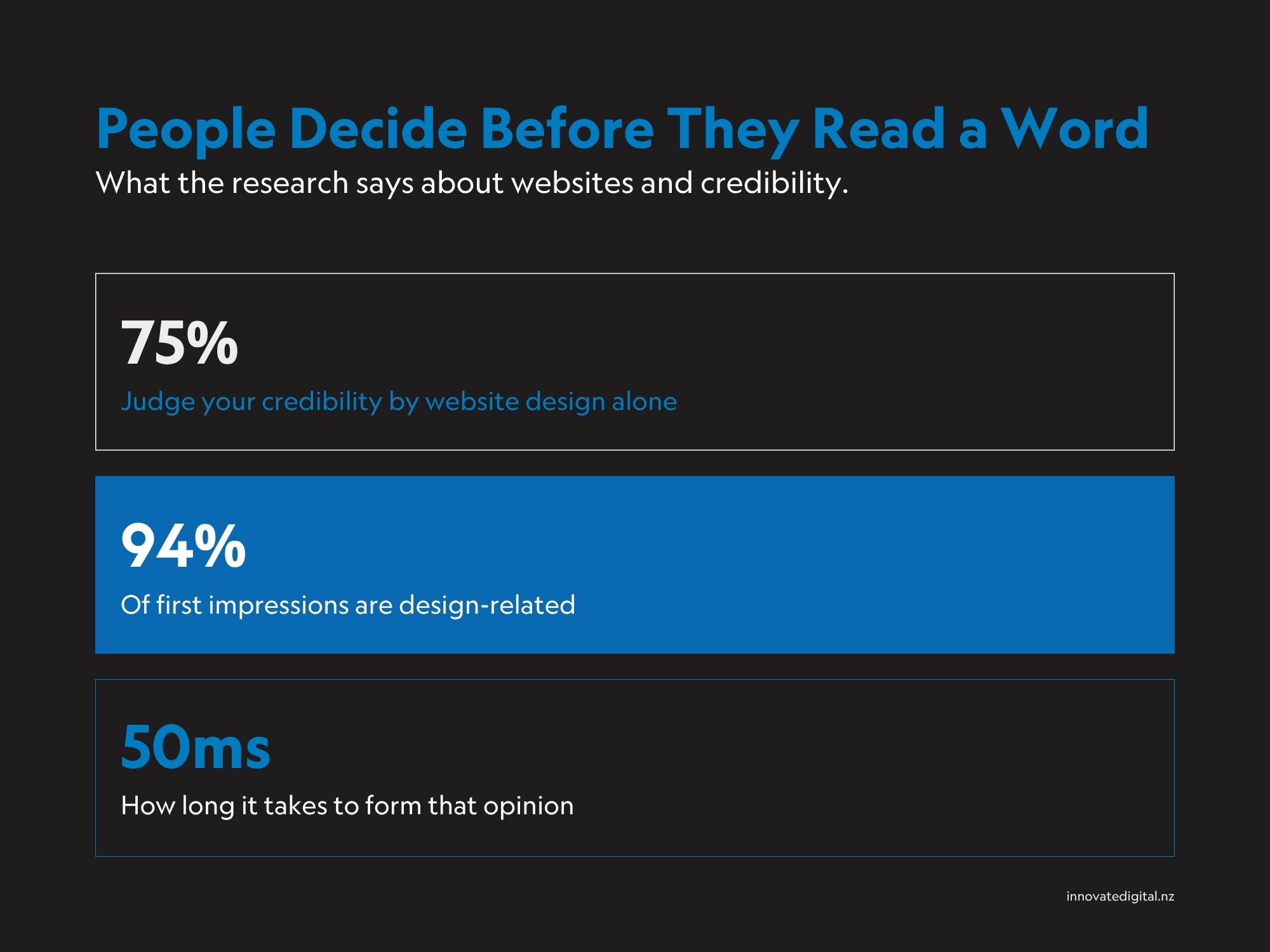
Stanford’s web credibility research, one of the most repeated findings in this field for good reason, found that 75% of people judge a company’s credibility based on website design alone.
Other research puts the number even higher: 94% of first impressions are design-related, and that impression forms in about 50 milliseconds, before anyone has read a single sentence.
That means a visitor has already decided whether you look credible before they’ve learned anything about what you actually do or how good you are at it.
If your website doesn’t look like the business you’re actually running, that’s the story it tells, and it tells it instantly.
Your website tells people what you charge
Not every customer is a good customer, and the ones you attract are shaped by what your website tells them.
A self-built site doesn’t just look less polished. It says “small job, small budget,” no matter how good the real work behind it actually is.
Want $40,000 jobs? Your website needs to look like a business that does $40,000 jobs. If it looks like a $2,000 outfit, that’s mostly who’s going to enquire.
What's actually broken Is Usually More than just the look
When we dig into these sites, the same list of problems shows up almost every time:
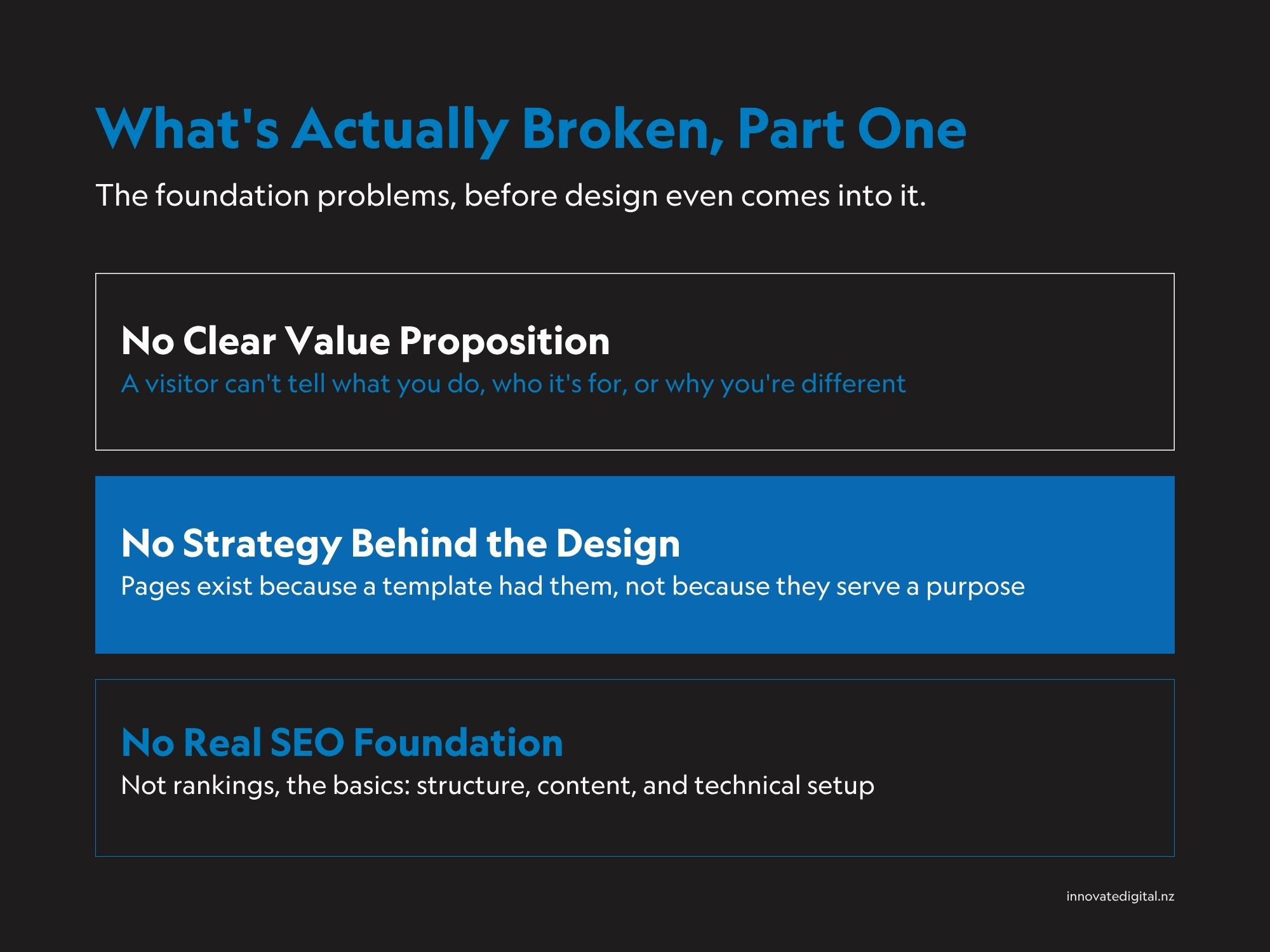
- No clear value proposition. A visitor can’t tell what you actually do, who it’s for, or why you’re different, inside the first few seconds.
- No strategy behind the design. Pages exist because a template had them, not because they serve a purpose in the customer’s decision.
- No real SEO foundation. Not just rankings, the basics: proper page structure, content that answers what people are actually searching, technical setup that doesn’t quietly work against you.
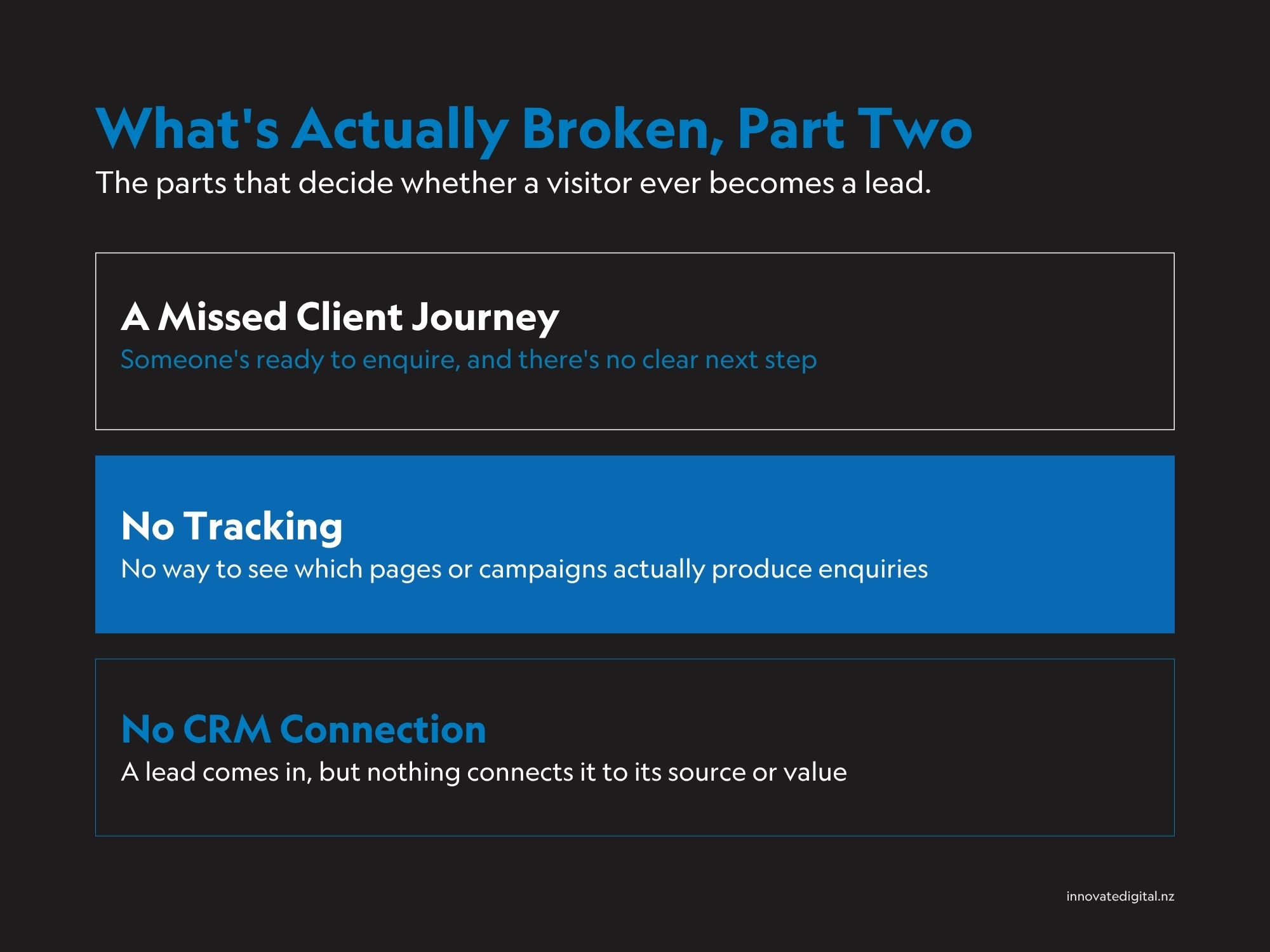
- A missed client journey. Someone lands on the site ready to enquire, and there’s no clear next step guiding them there.
- No tracking. No way to see which pages, campaigns, or keywords are actually producing enquiries.
- No CRM connection. Even if a lead comes in, nothing connects it back to where it came from or what it was worth.
Individually, any one of these is fixable.
Together, they mean the website isn’t just underwhelming, it’s actively working against the growth the business is trying to create.
Fix this before you spend more on ads
This is also, practically, a sequencing issue.
If you’re about to put more budget into Google Ads or lean harder into reviews and GBP, and your website has these problems, you’re pouring traffic into something that can’t convert it properly or tell you what happened once it arrived.
The order that actually works:
- Fix the value proposition and the client journey first
- Get the SEO foundation and tracking sorted
- Make sure the CRM is actually connected.
- Then push harder on Google Ads, reviews, and everything else that drives traffic to it.
Doing it in the other order means paying more to send people to the same broken experience.
Where to actually start
It’s easy to look at your website and think “it looks fine.”
And fine is fine, if you’re happy attracting lower-value clients.
But if you’re ready to own your ideal niche, forget whether it looks nice, and look at it the way your ideal client would.
If you were that client, ready to pay your ideal price, would you guess that price from the website in front of you? Would you get in touch?
If a $40,000 customer would look at your site and assume you’re a $2,000 outfit, that’s the actual gap to close. It’s not just “make it prettier.” It’s a value proposition problem solved through design and strategy.