

April has a funny way of making business owners pause.
The year is well underway, the early momentum has settled, and reality has started to set in. Some things are working. Others aren’t. And for many, marketing still feels like a lot of effort for not enough return.
Here’s what we see time and time again: businesses aren’t struggling because they’re not trying hard enough. They’re struggling because the activity isn’t backed by a clear strategy.
Posting, emailing, running ads — none of it works the way it should without a solid foundation behind it. And without that foundation, time and budget quietly disappear, leaving business owners wondering why growth still feels out of reach.
That’s exactly what this blog post is about.
why most businesses are stuck — and how a clear marketing strategy changes everything
You’re putting in the work. You’re showing up on social media, sending emails, maybe running ads. But the leads aren’t consistent, the enquiries aren’t quite right, and growth feels more like a grind than a momentum.
Sound familiar?
The problem usually isn’t effort. It’s the absence of strategy.

the real cost of marketing without direction
Most businesses don’t have a marketing problem — they have a clarity problem.
Without a defined strategy, marketing becomes a series of disconnected activities: a post here, a campaign there, a new channel every few months when the last one didn’t deliver. It’s exhausting, expensive, and almost impossible to measure.
The hidden cost isn’t just wasted budget. It’s wasted time, missed opportunities, and the slow erosion of confidence that comes from working hard without seeing results.
Here’s the truth: activity is not the same as strategy. And until you have one, you’re essentially guessing.

what a proper marketing strategy actually covers
A genuine marketing strategy isn’t a vague document full of buzzwords. It’s a commercially grounded plan that connects your business goals to the right audiences, messages, and channels — in the right order.
Here’s what it should include:
1. Strategic Business Review Before any tactics are discussed, a strong strategy starts with a clear-eyed look at where you are now — your positioning, your messaging, your offer structure, and what’s actually working versus what’s just keeping you busy.
2. Market & Competitor Insights Understanding your competitive landscape isn’t about obsessing over what others are doing. It’s about identifying where you can differentiate, what gaps exist in the market, and how to position yourself to stand out rather than blend in.
3. Ideal Client & Messaging Refinement One of the most common — and costly — marketing mistakes is trying to speak to everyone. Defining your priority audience segments and refining your messaging to speak directly to their challenges and aspirations is often where the biggest conversion improvements come from.
4. Channel & Campaign Strategy Not every channel is right for every business. The right strategy identifies where your ideal clients actually spend their time and attention, and builds a channel plan that’s realistic for your stage of growth — not just what’s trending.
5. Lead Generation & Conversion Plan Generating awareness is only half the equation. A robust strategy also addresses how you move people from interest to enquiry, and from enquiry to client — with clear mechanisms to strengthen conversion at every stage.
the power of a 90-Day roadmap
One of the biggest reasons marketing strategies gather dust is that they’re too abstract to action.
A 90-day implementation roadmap changes that. Instead of a long list of recommendations with no clear starting point, you have a prioritised, step-by-step plan that tells you exactly what to focus on first, second, and third — based on your resources, capacity, and growth goals.
Clarity creates momentum. And momentum creates results.
strategy is the difference between hoping and knowing
There’s a significant difference between hoping your marketing will work and knowing it’s built on a foundation that’s designed to perform.
When you have a strategy that’s aligned to your business model, your audience, and your growth stage — everything else gets easier. Your content has direction. Your campaigns have purpose. Your team (or you) stops second-guessing and starts executing with confidence.
That’s not a luxury. For any business serious about growth, it’s a necessity.
Ready to Build Yours?
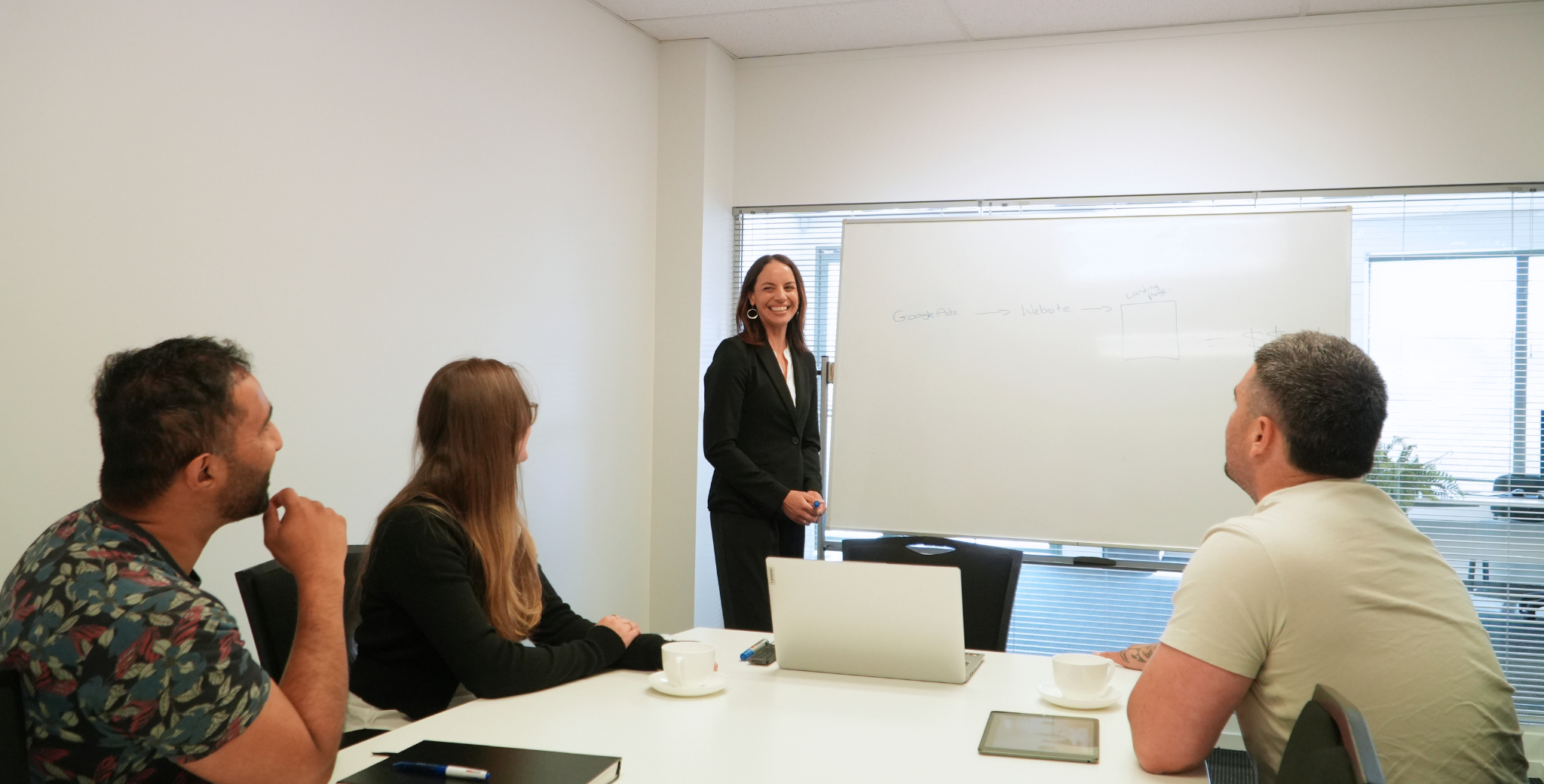
If you’re ready to stop guessing and start growing with intention, our Marketing Strategy & Growth Framework gives you everything you need — from a deep-dive Strategy Intensive through to a comprehensive report and a 90-day roadmap you’re ready to implement from day one.
frequently asked questions
Do I really need a strategy if my business is already busy?
Yes. Being busy doesn’t always mean you’re growing. Strategy helps ensure your effort leads to results, not just activity.
How detailed does a business plan need to be?
It doesn’t need to be long. A simple, clear plan that’s reviewed regularly is far more effective than a complex document that’s never used.
How often should I review my strategy?
At least quarterly. Strategy should evolve as your business, market, and goals change.
Can my website and marketing strategy change during the year?
Absolutely. Strategy isn’t rigid — it should adapt based on performance and insights.
best practices
- Set clear, measurable goals
- Focus on one main objective at a time
- Make sure your website, marketing, and sales are working together
- Check in on progress regularly
- Adjust based on real data, not guesswork
- Take action – your strategy is only as strong as the actions you take
planning for sustainable growth
Sustainable growth doesn’t come from short bursts of activity. It comes from consistent, intentional action over time.
By starting the year with a clear strategy and plan, you create space to work smarter — not harder. You’re able to measure progress, refine your approach, and make decisions based on insight rather than urgency.
That’s how businesses build momentum that lasts beyond the first few months of the year.
Want help putting this into action?
If you’d like help turning your ideas into a clear, workable plan, we’ve created a practical resource to get you started. Download the pdf, print it, and keep it near to you on your desk. Check in regularly to make sure you are on track, and make adjustments as needed.