

January often brings a surge of motivation for business owners. New goals. Fresh ideas. Big plans for the year ahead.
But here’s the challenge we see time and time again: the year starts busy — but not always strategic.
Activity without direction can feel productive in the moment, but still leave you in exactly the same place months down the track.
Without a clear plan, time and budget can disappear quickly, sometimes leaving business owners unsure of what they’ve actually achieved.
That’s why strategy and planning matter more than ever at the start of the year.
why being busy isn’t the same as being strategic
Being busy doesn’t always mean you’re moving forward.
Posting on social media, updating your website, running ads, or trying new marketing tools can all feel productive. But without a clear strategy behind them, these efforts often lack focus — and results.
When marketing activity isn’t tied back to clear business goals, it becomes reactive. You end up responding to what feels urgent rather than working towards what actually matters.
Strategy gives your activity purpose. It ensures every action supports a bigger goal, rather than adding to the noise.
what business strategy really is (and isn’t)
Business strategy isn’t about having a long document that sits in a drawer. And it isn’t about predicting every move you’ll make for the next 12 months.
At its core, strategy is about clarity.
Many businesses don’t spend much time on strategy. Research shows that almost half of business leaders spend less than one day a month thinking about it — and as a result, many organisations fail to achieve a large portion of their strategic goals.
This highlights why planning is so important. Without regular time set aside to review and adjust strategy, even good ideas can fail to turn into real results.
A clear business strategy answers questions like:
- Where are we heading?
- What are we prioritising this year?
- What does success actually look like?
- What should we say no to?
- Who are we actually marketing to?
- What does good business look like for us? And what is not good business?
Without this clarity, marketing decisions become guesswork. With it, decision-making becomes simpler, faster, and more confident.
why “doing more” without a plan doesn’t work
Common patterns we see include:
- Posting on social media simply because it feels expected
- Running ads without clear objectives or success measures
- Tweaking a website without understanding what isn’t working
- Jumping on new tools or platforms without checking whether they align with business goals
- Switching between marketing providers who focus on doing things, rather than building a strategy that connects those efforts
- Dismissing channels like Google Ads because they were tried without the knowledge or optimisation required to make them work
The result?
Busy, exhausted business owners — working long hours, spinning their wheels, and feeling stuck without forward momentum.
A strong strategy helps you choose what not to do, just as much as what to focus on.
why planning early in the year gives your business an advantage
Starting the year with a clear plan allows you to:
Align your efforts
Your website, marketing, and sales all work toward the same goal instead of pulling in different directions.
Set realistic, measurable goals
You know what success looks like — and how to track it.
Avoid reactive decisions later in the year
Less panic, fewer rushed fixes, and more confident choices.
Allocate budget intentionally
Spending is guided by strategy, not emotion or urgency.
Measure what’s actually working
You can double down on what delivers results and adjust what doesn’t.
Instead of reacting to problems, you’re building systems that support sustainable growth.
what strategic marketing looks like in practice
Having a strategy doesn’t mean guessing what to do next. Strategic marketing follows a clear process that helps businesses move from goals to action in a focused, intentional way.
A simple strategic marketing approach includes:
- Understanding your target audience and ideal customer
- Clearly defining your business goals, values, and positioning
- Clarifying your value proposition — why someone should choose you
- Choosing the right marketing channels for your audience and offering
- Implementing your marketing actions with purpose
- Tracking results and regularly reviewing what’s working and what’s not
Want help putting this into action?
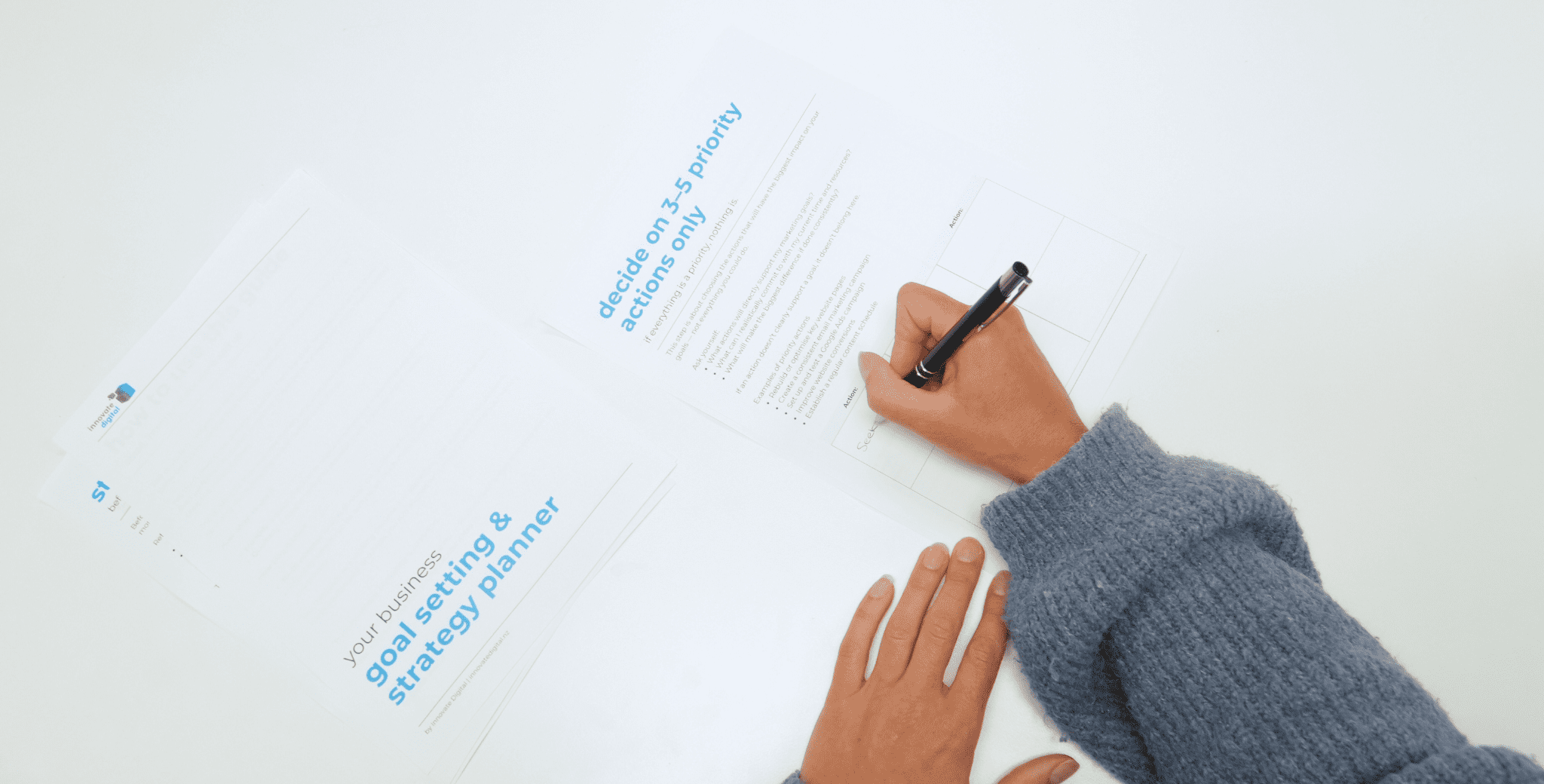
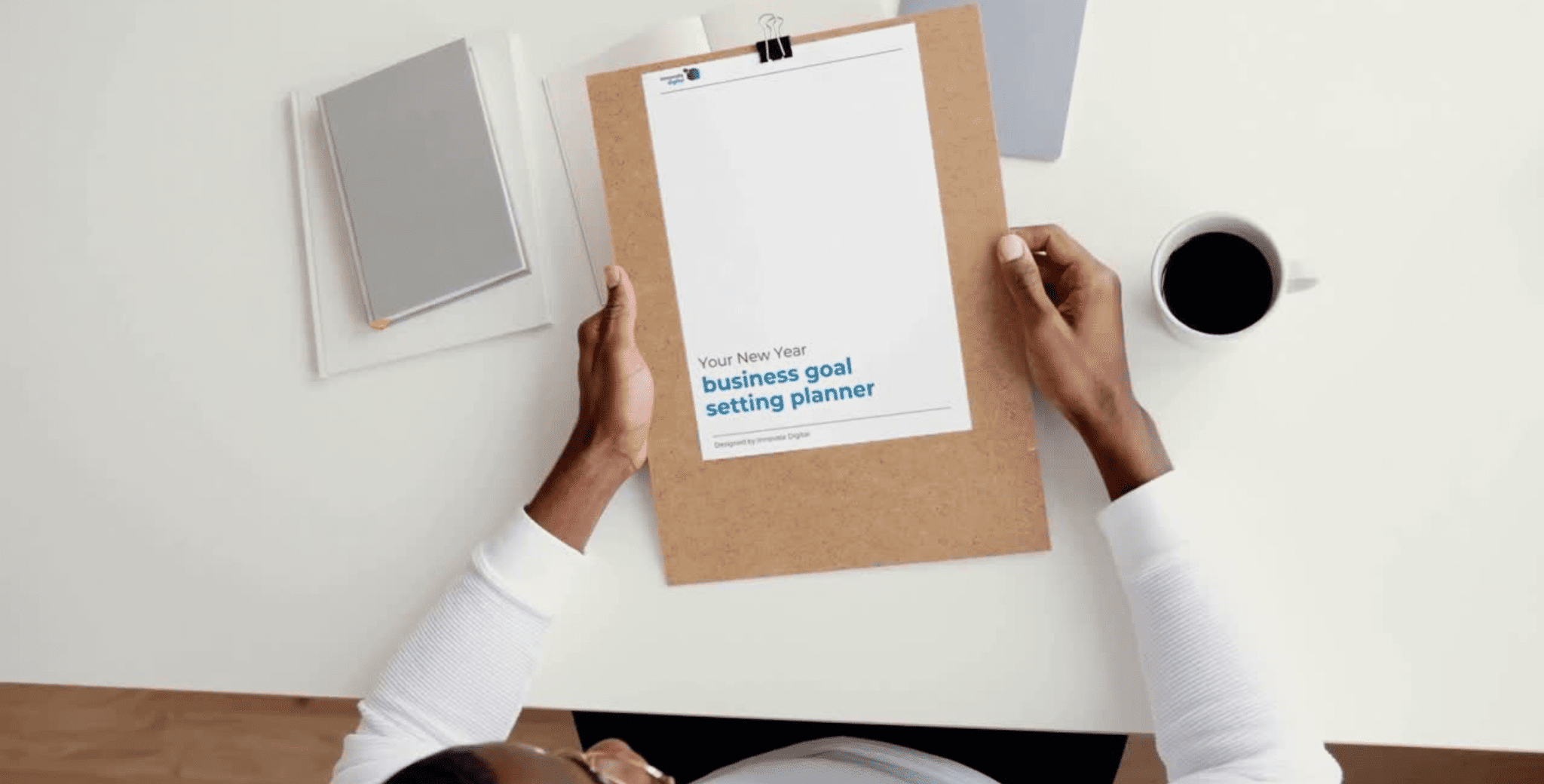
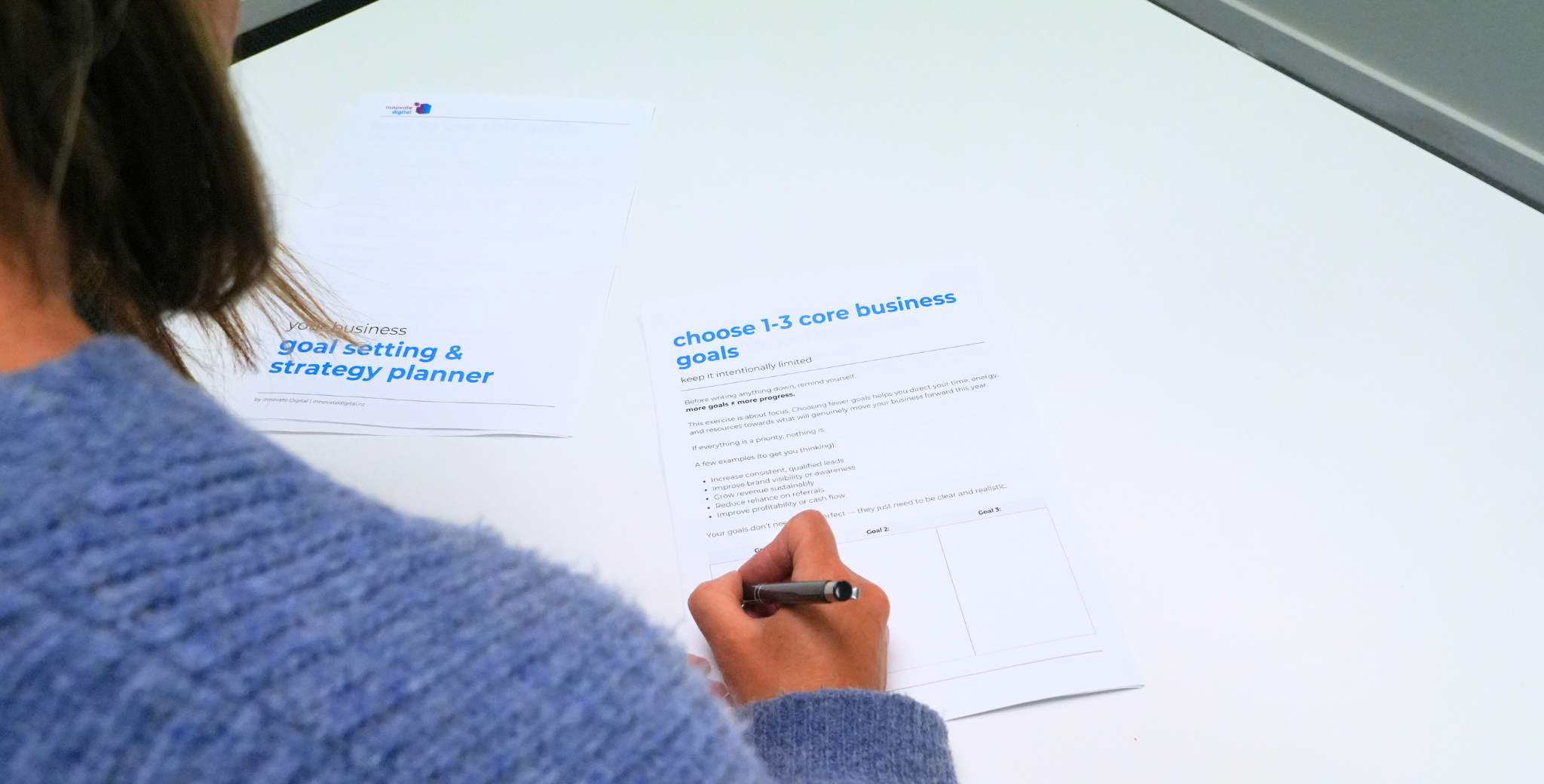
Download our free Goal Setting & Strategy Planner — a practical tool you can print, keep nearby, and use to regularly check in on your goals, progress, and priorities.
frequently asked questions
Do I really need a strategy if my business is already busy?
Yes. Being busy doesn’t always mean you’re growing. Strategy helps ensure your effort leads to results, not just activity.
How detailed does a business plan need to be?
It doesn’t need to be long. A simple, clear plan that’s reviewed regularly is far more effective than a complex document that’s never used.
How often should I review my strategy?
At least quarterly. Strategy should evolve as your business, market, and goals change.
Can my website and marketing strategy change during the year?
Absolutely. Strategy isn’t rigid — it should adapt based on performance and insights.
best practices
- Set clear, measurable goals
- Focus on one main objective at a time
- Make sure your website, marketing, and sales are working together
- Check in on progress regularly
- Adjust based on real data, not guesswork
- Take action – your strategy is only as strong as the actions you take
planning for sustainable growth
Sustainable growth doesn’t come from short bursts of activity. It comes from consistent, intentional action over time.
By starting the year with a clear strategy and plan, you create space to work smarter — not harder. You’re able to measure progress, refine your approach, and make decisions based on insight rather than urgency.
That’s how businesses build momentum that lasts beyond the first few months of the year.
Want help putting this into action?
If you’d like help turning your ideas into a clear, workable plan, we’ve created a practical resource to get you started. Download the pdf, print it, and keep it near to you on your desk. Check in regularly to make sure you are on track, and make adjustments as needed.