

Every tradie gets pitched leads from somewhere.
Directories, lead-gen resellers, a mate’s cousin who “does SEO,” an agency promising guaranteed results.
Most of those pitches skip the two questions that actually matter: what does a won job cost through this channel, and who owns the asset your money is building?
Here’s what actually works for tradies with Google Ads specifically, and how to tell if your ad campaigns are pulling their weight.
Start with what you own, not what you rent
In the case of lead-gen companies, it’s not your brand you’re building. It’s theirs. If they shut down tomorrow, or you cancel with them, your business is basically invisible.
This is where having your own website, SEO, and Google Ads campaign differs from lead-gen. It builds your brand, lets you define what “good business” actually looks like for you, connects everything through to a CRM, and lets you hone in on the numbers that matter.
Directories and lead marketplaces charge per connection or a flat annual fee, and you’re buying into someone else’s platform, competing with other tradies for the same lead. Your own Google Ads account, paired with your own website and your own Google Business Profile, is the fastest owned channel available: your ad, your enquiry, exclusively yours, live within days.
That doesn’t mean directories are useless, they can fill capacity gaps. But they shouldn’t be the plan. The plan is building the channels you control.
What the numbers might look like
NZ cost-per-click and cost-per-lead figures vary enormously between trades, search terms and locations. They can be less than $1 per click, to easily $10-20 for competitive trades search terms in main centres.
For home services, Google Search Ads regularly convert at 12% to 16% for emergency-type searches, based on NZ home services benchmarks.
Our own client campaigns typically run well above that, in the 24% to 35% click-to-lead range, which is the difference a properly matched ad, landing page, and follow-up system actually makes.
Treat any number you’re quoted, including the ones above, as an orientation point, not a promise. The only number that actually tells you whether a campaign’s working is the one below.
The metric that actually matters: cost per won job
Cost per click is a cost.
Cost per lead is closer, but a lead isn’t a customer.
The number worth tracking is cost per completed, paid job, because that’s the one that tells you whether the channel is actually profitable, not just active.
Work this out for any channel you’re paying for, Google Ads included, by dividing total spend over a fair sample period by the number of jobs it actually produced. Compare that against what a job’s typically worth to you.
A modest monthly spend producing even one booked job a week can be a strong channel, if the job value supports it, regardless of how expensive the individual click looked in isolation.
This is what our CRM tracks completely – from click through to paid job completion. So that we can see exactly what your Google ROI is, and which search terms, ad assets, and demographs are driving those leads.
How to Improve an existing campaign
If you’re already running Google Ads and want it working harder, here are the levers that matter most:
- Fix Quality Score before you touch your budget. Google scores how relevant your ad and landing page are to the search term. A better-matched ad and page can cut your cost per click substantially for the same position, better ads cost less, not more.
- Start on Maximize Clicks with a CPC cap, then graduate. Once you’ve got roughly 30 or more conversions a month of real data, switching to Target CPA or Target ROAS lets Google’s bidding do more of the work, but it needs that data first or it’s guessing.
- Pool your data instead of running isolated campaigns. Combining performance across campaigns into a single bidding strategy gives Google more signal to optimise against than several small, separate accounts each starting from scratch.
- Pair Search with a Performance Max local goal, since Local Services Ads aren’t available in NZ. PMX handles the wider, cheaper groundwork across Search, Maps, and Display, while your Search campaign stays the sharper, more controllable performer for high-intent local terms.
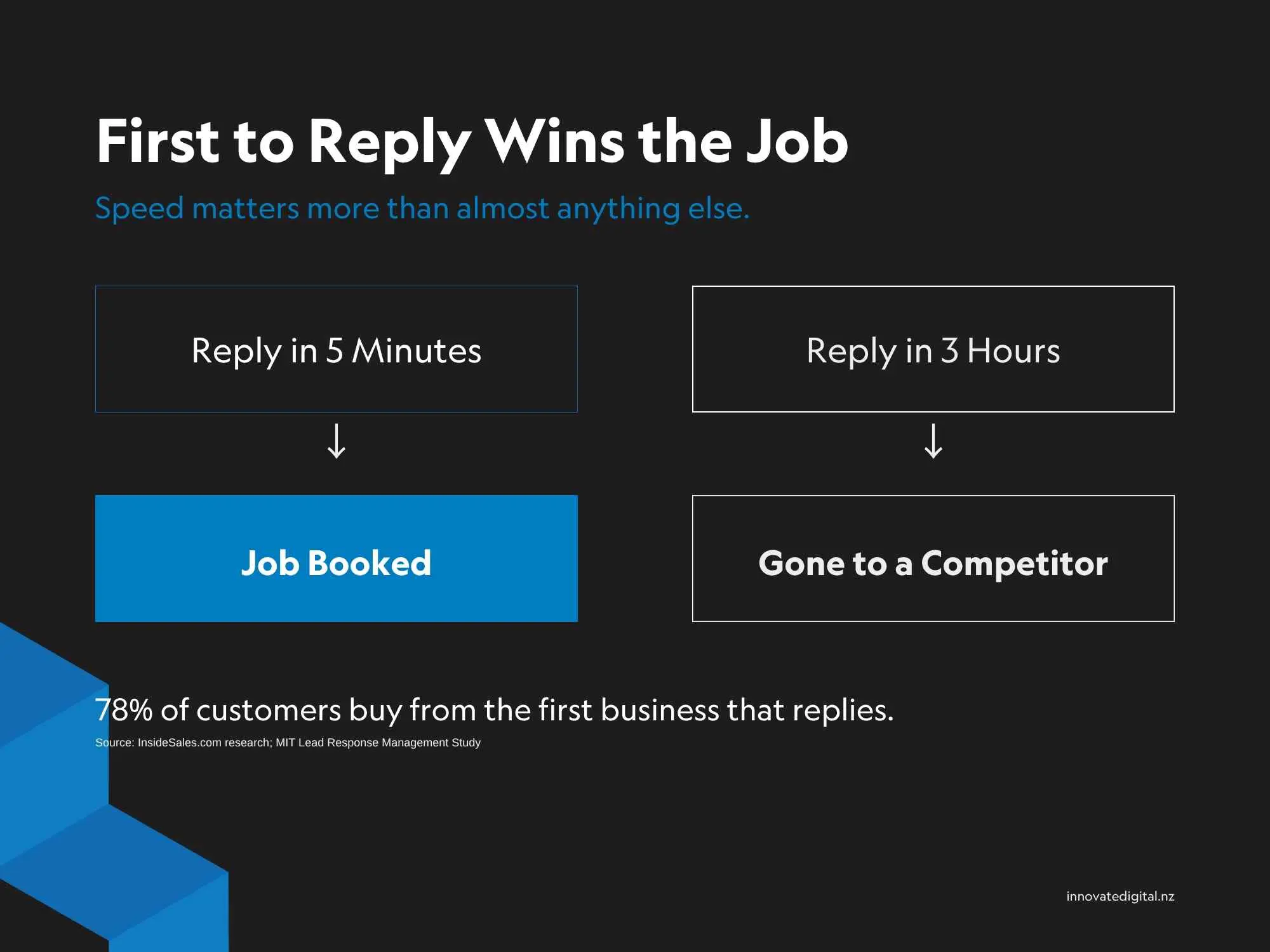
- Build the owned channels alongside the paid ones. Google Business Profile, reviews, and a fast follow-up habit cost time, not money, and a tradie with forty solid reviews and same-day replies routinely outperforms a bigger ad budget sitting on a weak profile.
Where to start
Most small NZ businesses get an effective Google Ads campaign running somewhere between $1,000 and $2,500 a month in ad spend itself. There’s no fixed minimum, but if you start too low, you won’t have enough budget to compete effectively with other businesses in the same space. Many businesses make this mistake, then conclude Google Ads doesn’t work. Having enough budget from the start matters.
Another important foundation for an effective Google Ads campaign is your website. If your website doesn’t match the value of the service you provide, you won’t convert the level of job you’re actually looking for. And if you don’t have conversion tracking properly set up, neither you nor Google will know which jobs are actually converting, which means Google can’t optimise toward them for you.
Once you’ve got these things nailed, and you’ve proven your Google Ads system works, you can scale the budget.
If you have an agency managing your ads for you, you’ll pay a management fee on top of your ad spend.
Make sure you know your numbers. Understand what your leads are costing, which ones are converting into completed jobs, and what your true ROAS looks like once you follow it all the way through.